
Osteochondrosis, Sports-related conditions
What is Osgood-Schlatter Disease?
Osgood-Schlatter disease is a condition that most often affects young athletes, such as youth soccer players, basketball players, and gymnasts who participate in sports that involve running, jumping, and quick changes of direction. The condition develops when the tendon that connects the kneecap (patellar tendon) pulls on the growth plate at the top of the shinbone (tibial tuberosity). This constant pulling and stress can irritate the area, causing pain and sometimes a small bump below the knee. It is caused by inflammation of the growth cartilage of the tibial tuberosity (anterior tibial apophysis), also known as osteochondrosis, at the point where the patellar tendon attaches.
It is a common cause of knee pain in children and adolescents during periods of rapid growth. It usually occurs in boys between the ages of 12 and 14, and in girls between 10 and 13.
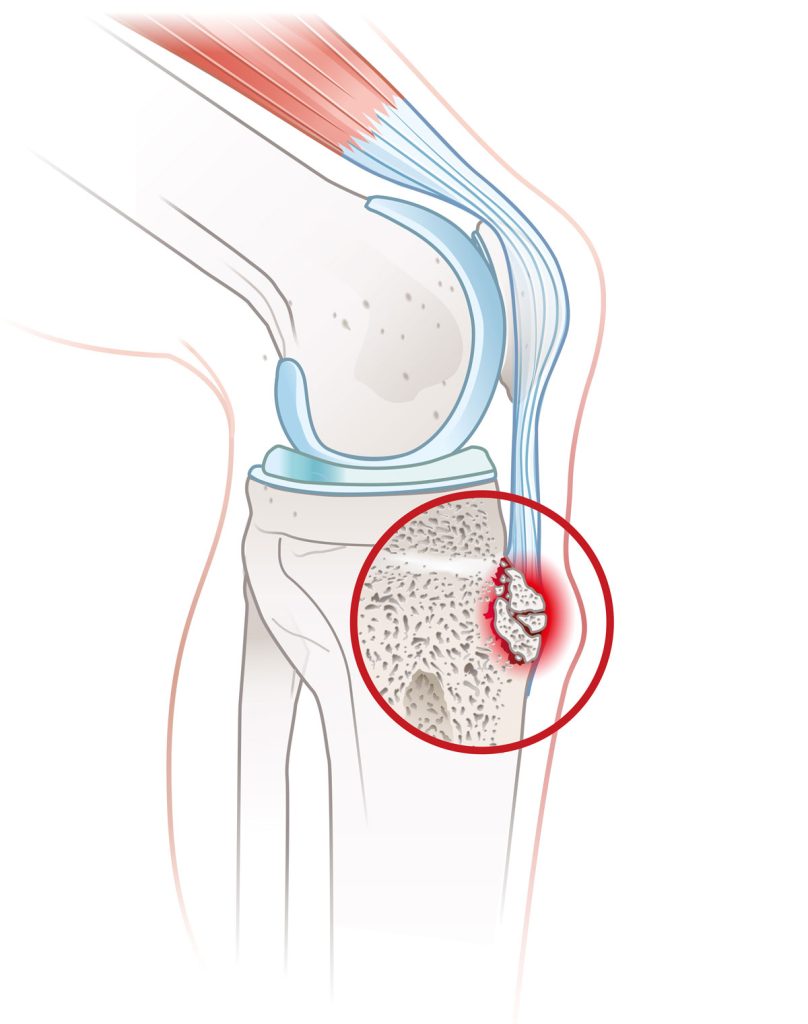
Causes of Osgood-Schlatter Disease
The repeated pulling (traction) on the growing cartilage leads to painful inflammation and can sometimes cause fragmentation of the developing bone.
Clinically, it presents with pain that increases with load and knee flexion, especially:
- during knee extension
- with palpation of the tibial tuberosity
The disease usually affects one knee more than the other, but both knees can show symptoms. Sports activity tends to increase both pain and swelling, but it does not affect the long-term healing process.

How is Osgood-Schlatter Disease Diagnosed?
A noticeable swelling just below the kneecap, along with radiographic evidence of fragmentation of the growth center, is diagnostic of the disease.
Pain may be present for months before swelling appears.
Associated findings may include tendon inflammation.
Treatment and Recovery
The condition is self-limiting, meaning it typically resolves on its own once the child has finished growing. Treatment focuses on easing symptoms so kids can stay as active as possible.
Common ways to manage it include:
- Taking a break or reducing sports activities until the pain improves
- Stretching exercises for the front and back thigh muscles (quadriceps and hamstrings)
- Ice packs to reduce pain and swelling
The Riva Method
In all cases of osteochondrosis, the Riva Method—a program of high-frequency proprioceptive reprogramming designed to improve single-leg stance stability—is strongly recommended. This approach addresses the underlying causes by reducing mechanical stresses that trigger inflammation at the patellar ligament insertion site, thereby promoting progressive recovery.
Surgery is very rare and only considered if there’s excessive bone growth that keeps causing problems.
The Bottom Line
Osgood-Schlatter disease can be frustrating for young athletes, but it’s a temporary condition. With rest, stretching, and simple home care, most children recover fully and return to their favorite activities without lasting issues.