
What is it?
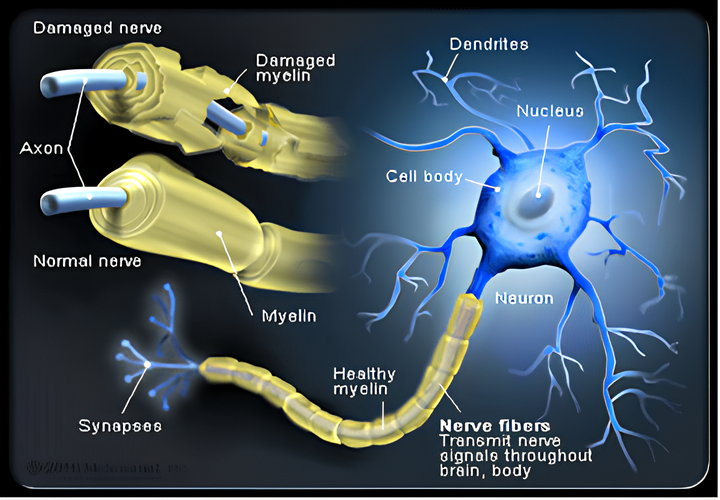
Multiple sclerosis (MS) is a chronic, neurodegenerative, demyelinating disease of the central nervous system (CNS).
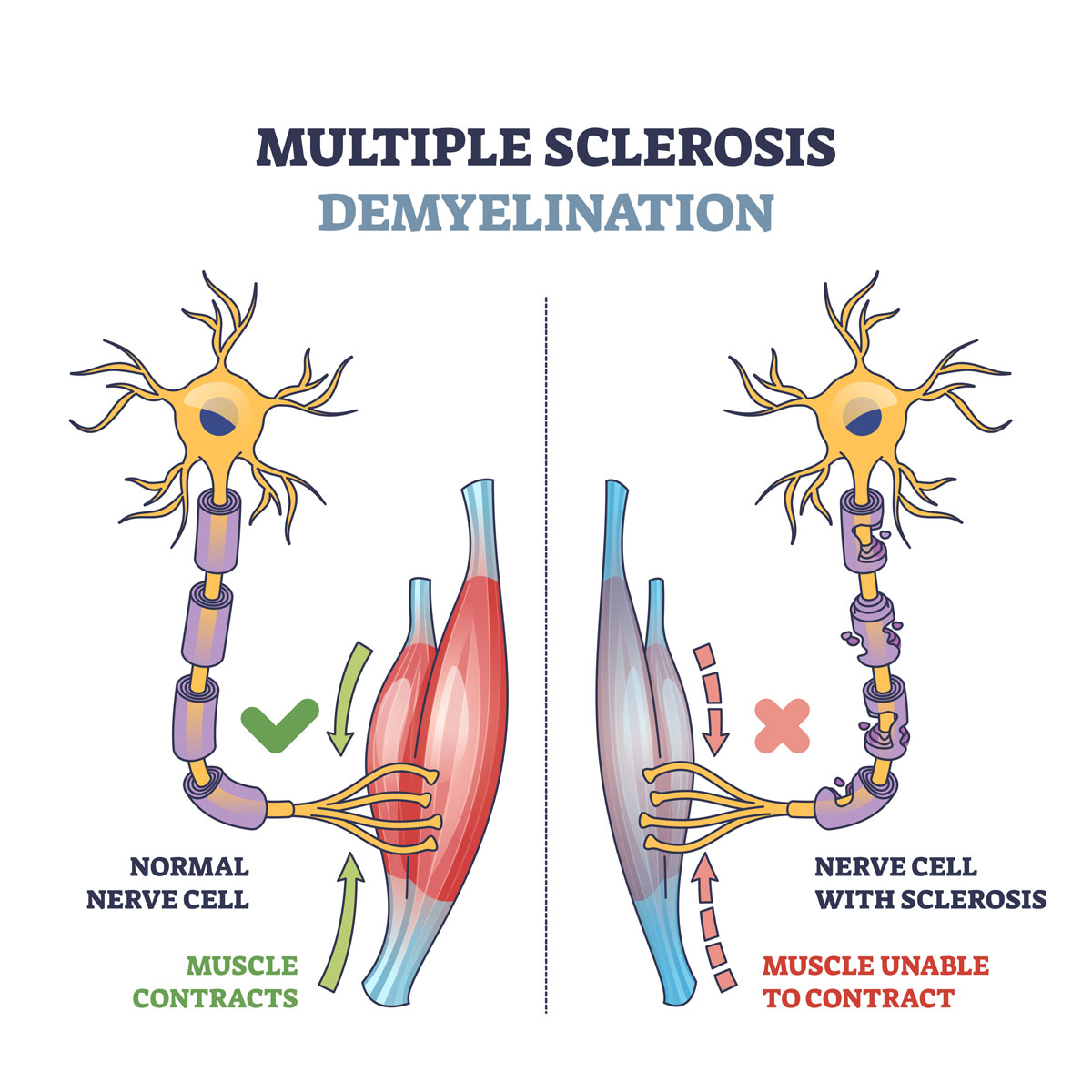
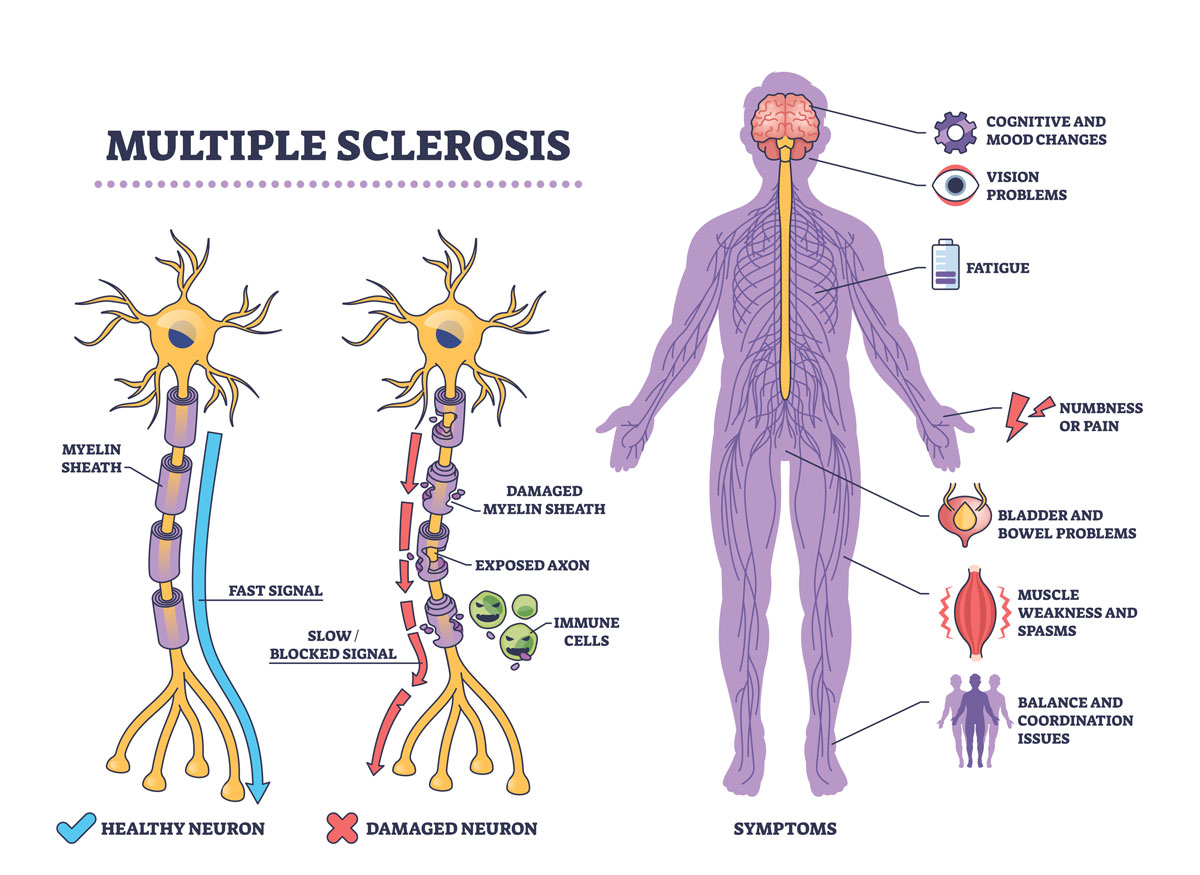
In MS, damage and loss of myelin occur in multiple areas of the CNS (hence the name “multiple”). An autoimmune attack targets myelin, triggering localized inflammation that destroys both the myelin and the cells responsible for producing it.
These demyelinated areas, referred to as plaques or lesions, can occur anywhere in the brain and spinal cord, with a particular predilection for the optic nerves, cerebellum, and spinal cord.
Causes of Multiple Sclerosis
The exact causes of MS remain uncertain. Understanding the underlying mechanisms is essential for developing effective treatments and prevention strategies.
Current evidence suggests several contributing factors:
- Immunological: MS is widely accepted as an autoimmune disorder in which the immune system attacks the CNS.
- Environmental: The disease is more common in regions farther from the equator. Exposure to certain environmental factors before puberty may predispose individuals to MS later in life.
- Infectious: Since viruses are known to cause demyelination, it is possible that a viral or infectious agent plays a role in triggering MS.
- Genetic: MS is not directly inherited, but having a first-degree relative with the disease increases the individual’s risk of developing it.
Diagnosis of Multiple Sclerosis
Diagnosis is based on a combination of:
- Patient’s medical history and reported symptoms
- Neurological examination
- Diagnostic tests such as MRI, evoked potentials, and cerebrospinal fluid analysis

Treatment of Multiple Sclerosis
At present, there is no definitive cure for MS. However, available medications can reduce the frequency and severity of relapses, thereby slowing the progression of neurological damage.
Functional Reserve and the Riva Method
In a degenerative neurological condition like MS, disability arises not only from the primary anatomical damage (demyelination that disrupts nerve signaling) but also from secondary damage caused by disuse and task simplification.
When motor efficiency declines, patients naturally attempt to compensate by choosing easier movement strategies or avoiding challenging tasks. This adaptation leads to a vicious cycle of reduced activity, accelerated functional loss, and further decline in independence.
Thus, functional impairment is the sum of both primary neurological damage and secondary damage resulting from disuse.
While functional reserve diminishes in advanced stages, it can be harnessed for many years to improve motor independence and quality of life significantly. In developed countries, the unused functional reserve typically accounts for 30–50% of an individual’s performance potential, whether they are healthy or affected by disease.
The Riva Method is a powerful activator of this reserve. By reprogramming proprioceptive control and remodeling neuromuscular structures, it reawakens a potential written in our genes but left dormant through years of disuse.
A helpful metaphor: entering a dark room requires finding the light switch to function safely. The Riva Method not only helps “turn on the light,” but also restores the entire electrical system, replacing weak or faulty components (wires, bulbs, switches) to make it efficient again.
The Role of the Riva Method in MS
The Riva Method is not a cure for multiple sclerosis. Instead, it provides a structured pathway to recover effectiveness and safety in walking and other anti-gravity movements, such as:
- Climbing and descending stairs
- Standing up and sitting down
- Crossing the street
- Stepping up or down from a curb
By activating functional reserve, the method helps patients regain autonomy, reduce fall risk, and improve overall quality of life.