
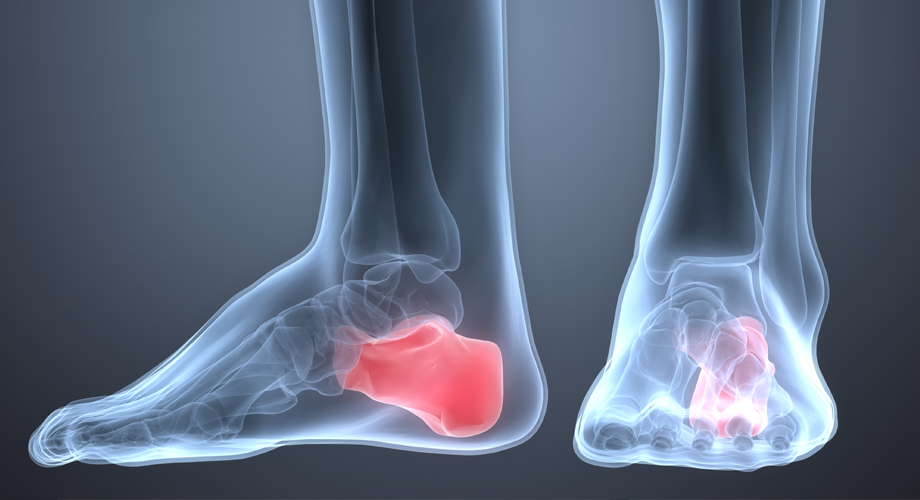
What is it?
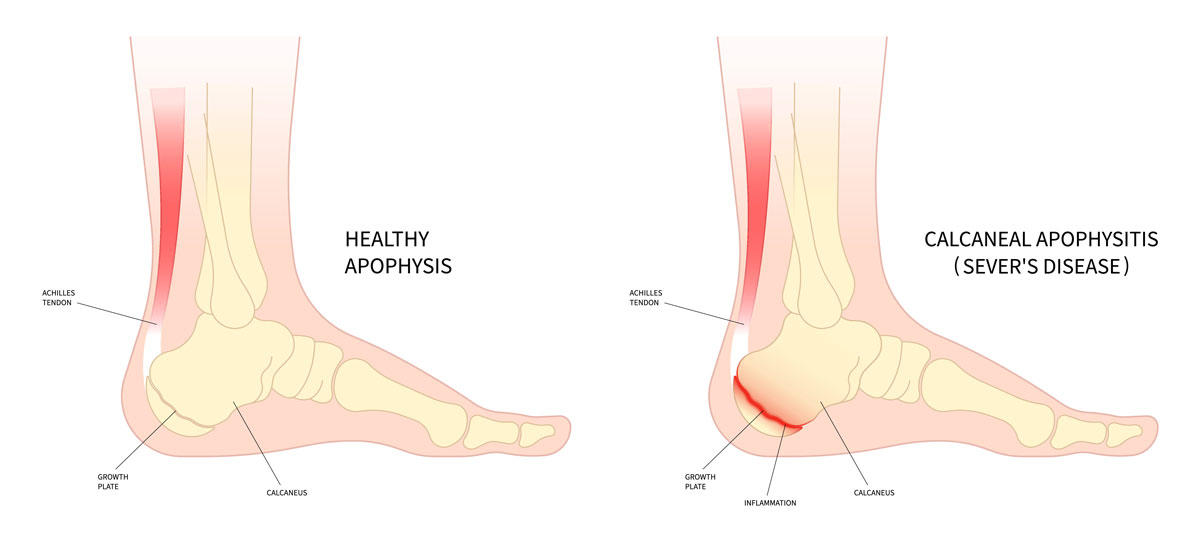
Sever’s Disease – also known as Sever–Blenke disease – is an osteochondrosis of the posterior calcaneal apophysis. It is an inflammation of the heel’s growth plate (calcaneal epiphysis), typically presenting as heel pain.
The growth plate, or epiphyseal plate, is an area near the end of a growing bone where new bone tissue is formed. Here, cartilage cells gradually ossify and turn into bone.
Sever’s Disease occurs mainly in boys during skeletal development, most commonly between the ages of 9 and 11. In most cases, it affects both heels and the pain often radiates upward toward the Achilles tendon.
Causes
Sever’s Disease is often associated with rapid growth spurts and may be triggered by:
- Excessive load on the posterior portion of the heel (hindfoot) due to structural abnormalities (most notably cavus foot).
- Sports involving repetitive impact, especially running and jumping on hard surfaces (e.g., basketball, soccer, gymnastics).
- Inadequate footwear that fails to support the heel properly.
During growth spurts, bones can lengthen more quickly than muscles and tendons, which increases muscle tightness and tendon stress. In Sever’s Disease, the Achilles tendon—the strongest tendon inserting at the heel’s growth plate—becomes overly taut, leading to inflammation.
Diagnosis
Diagnosis is based on a careful clinical examination and the symptoms reported by the child.
X-rays of the heel (anteroposterior and lateral views) may show fragmentation of the growth plate and bone sclerosis. However, radiographs are not generally considered diagnostic for Sever’s Disease; some physicians prescribe them primarily to rule out other conditions such as fractures or bone cysts.
Treatment
Treatment depends on the severity of symptoms:
- Mild cases: use of soft silicone heel pads and temporary reduction of sports activity.
- Supportive orthotics: insoles may help redistribute load and relieve stress on the heel.
- Severe cases: when pain persists despite rest, complete withdrawal from sports for about two months may be required.
The Riva Method
In all cases of osteochondrosis, the Riva Method—a program of high-frequency proprioceptive reprogramming designed to improve single-leg stance stability—is strongly recommended. This approach addresses the underlying causes by reducing mechanical stresses that trigger inflammation, thereby promoting progressive recovery.
Do not ignore the pain!
Persisting with sports activities despite heel pain can lead to permanent calcifications, which may eventually require surgical removal.