
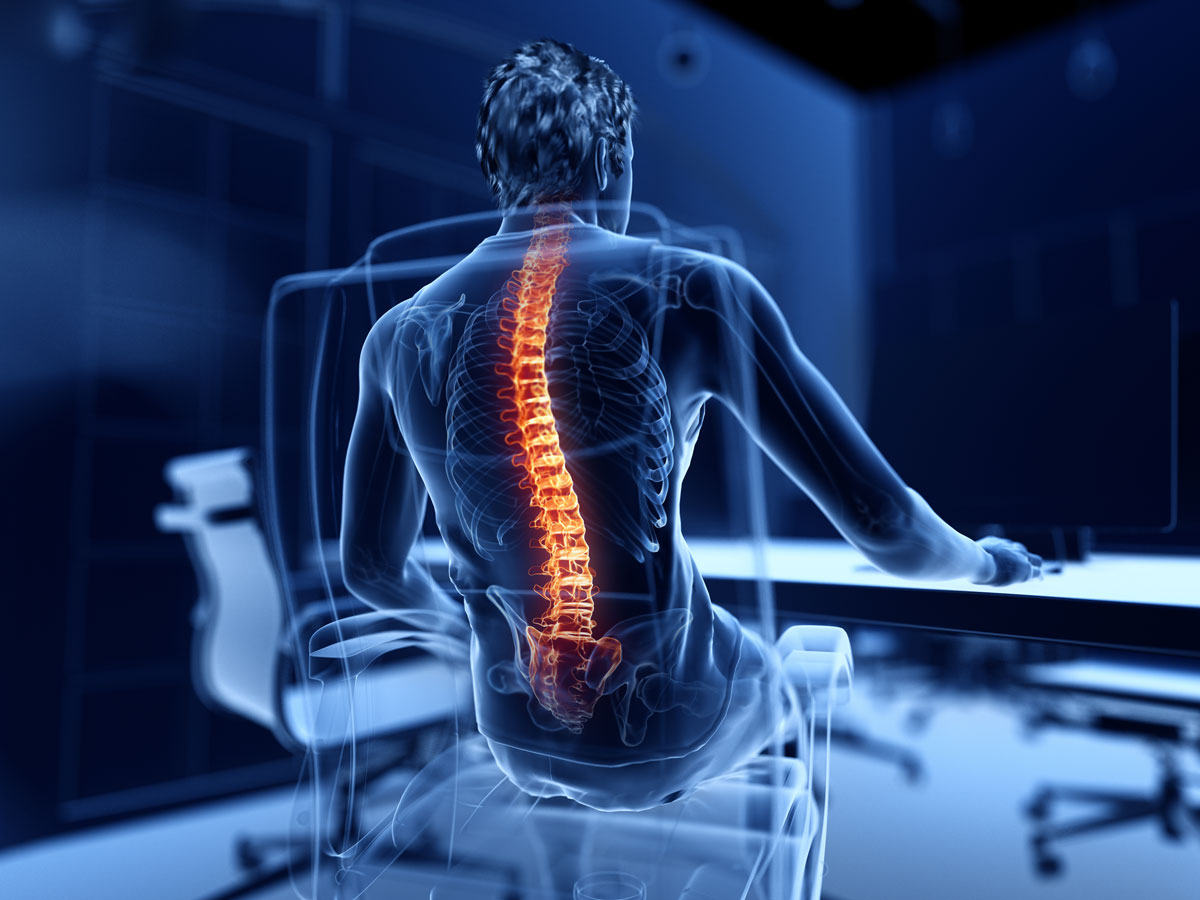
What is round back
Round back describes a postural deviation characterized by increased thoracic kyphosis and loss of spinal physiological alignment. Unlike structural hyperkyphosis, it is generally a functional and flexible condition, in which the excessive curvature can be partially or fully corrected through voluntary postural adjustments.
- Etiological factors include sedentary behavior, prolonged sitting, muscular imbalance (weak spinal extensors, tight anterior chain), and insufficient proprioceptive control.
- If untreated, functional round back may evolve into fixed hyperkyphosis, with consequences on balance, breathing, and joint function.
- Round back is not yet a “structural pathology” (like hyperkyphosis), but it is a warning sign: it indicates that postural control systems and supporting musculature are not working optimally.
Why the Riva Method is indicated
The Riva Method is a scientifically validated approach to postural and proprioceptive training that leverages controlled proprioceptive stimuli and visual-motor integration. It is based on three key principles:
- Proprioceptive Activation
- Through exercises on a specific unstable rocking electronic platform, proprioceptive afferents from muscles, joints, and ligaments are stimulated.
- This improves sensorimotor integration within the central nervous system, enhancing spinal alignment and dynamic postural control.
- Controllable Instability
- The method introduces instability with a mobile center of rotation creating conditions where the subject must continuously regulate micro-adjustments of posture.
- This leads to adaptive strengthening of spinal extensors and deep stabilizers, counteracting the tendency toward thoracic flexion.
- Subcortical Visual Anchoring
- Visual input is integrated at a subcortical level, facilitating faster and more automatic postural corrections.
- This mechanism enables the transition from macro-instability at low frequency to micro-instability at high frequency, which is crucial for long-term postural re-education.
Why It Is Indicated in Round Back
In subjects with functional round back, the Riva Method:
- Targets the neuromuscular deficit underlying the postural alteration, rather than merely compensating with external supports.
- Strengthens spinal extensors and improves their endurance under dynamic conditions.
- Trains balance and posture in motion, addressing the postural system as an integrated sensorimotor network.
- Prevents progression to structural hyperkyphosis, by restoring adaptive plasticity of the postural control system.
Conclusion
Round back represents a reversible postural dysfunction, and the Riva Method is indicated because it provides a neurophysiological, proprioceptive, and visually anchored intervention that restores postural controllability and reduces the risk of progression to irreversible spinal deformity.