

The mechanism behind the Riva Method can be summed up in one powerful statement:
‘We Are What We Do’
The Riva Method reactivates the subject’s potential after years of underuse.
01.
Control
High-frequency Proprioceptive Training (HFPT).
Enhancing proprioceptive control reduces single leg-stance instability. This effect attenuates -up to eliminating- the mechanical factors that contribute to the inflammatory processes responsible for many musculoskeletal pathologies.
02.
Endurance
Ensuring long-lasting proprioceptive control.
An adequate volume of HFPT ensures long-lasting proprioceptive control and prevents performance decline associated with increased instability due to proprioceptive fatigue.
03.
Resilience
Joint Tissue Remodeling.
The application of tens of thousands of medium- to low-intensity tractions, categorized by anatomical region, promotes structural remodeling and enhances the resilience of ligaments and joint tissues.
04.
Reactivation
Functional Reserve Activation.
The combined effect of the previous mechanisms activates the functional reserve present in each individual.
Single Stance Stability
Sensory Systems involved
Movements and posture are based on a formidable information gathering system.
In particular, there are three major sensory channels involved:
01.
The proprioceptive system
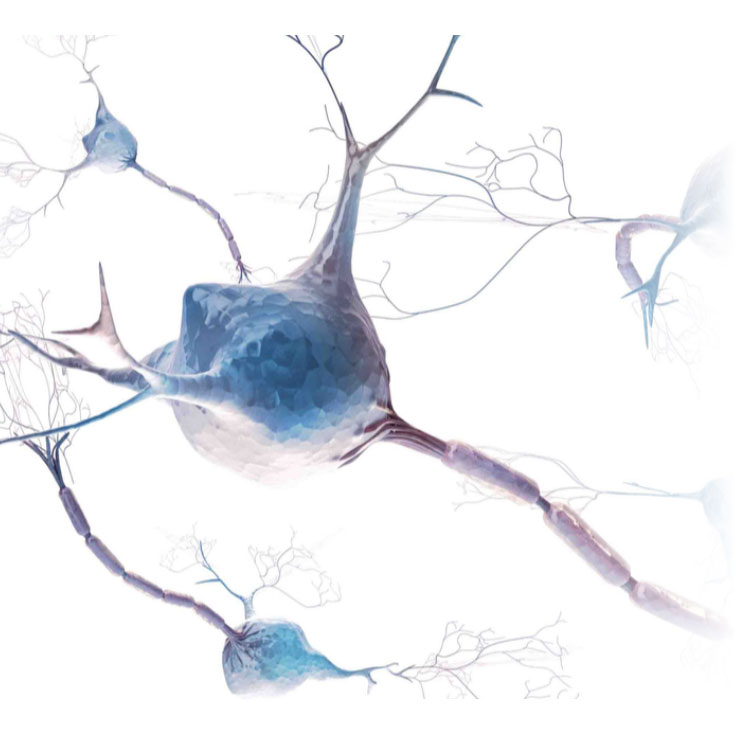
Is the primary stabilizer and represents a capillary spy network , with sensors present in muscles, tendons and joints, capable of informing at high speed0 the nerve centers.
02.
The visual system
Intervenes as a secondary stabilizer and is a true pointing mechanism capable of “anchoring” the body to environmental fixation points, improving the stability based on proprioceptive information;
03.
The vestibular system (emergence system)
Is the latter mechanism to come into play because it has a higher activation threshold. Its longer latency allows the joint action of the other two systems (precision system) to handle most postural situations in a more refined way. lt represents an emergency means that overrides the other two systems when head destabilization exceeds a certain magnitude and acceleration

Sensory system on which motion control is based. (D.Riva, C. Mamo, et al..Single Stance Stability and Proprioceptive Control in Older Adults Living at home: Gender and Age Differences. Journal of Aging Research, 2013)
Beyond proprioception
Why “Beyond proprioception”? Because in addition to optimizing proprioceptive control, RivaMethod bases much of its effectiveness on its ability to induce “structural remodeling “ and an increase in the “resilience “ of the hundreds of ligaments and joint capsules that are present in the lower limb (particularly in the ankle and foot) and spine. Resilience is defined as the ability of a material (in this case the connective tissue) to deform and then return to its starting state, without damage, when the deforming force ceases its action. This increase in rigidity and resilience contributes greatly to improve the protection of these structures, along with the more rapid and powerful action of the stabilizing muscles.
High-frequency Proprioceptive Training (HFPT)
The Riva Method has been shown to reduce ankle sprains by 81%, a level of effectiveness never before achieved in internationally published studies.
The Riva Method is based on the “High-frequency Proprioceptive Training” (HFPT), a training and rehabilitation method characterized by two components:

The Spindle training
The Spindle training increases the strength and speed of intervention of the stabilizing muscles (active brakes) by generating high-frequency proprioceptive reflexes and a corresponding number of muscle contractions.

The ligament resilience training
Ligament resilience training (passive stabilizers) increases the ability of the connective tissue to deform without damage and return to its pre-event state when the tensile forces applied during the sprain event cease.