
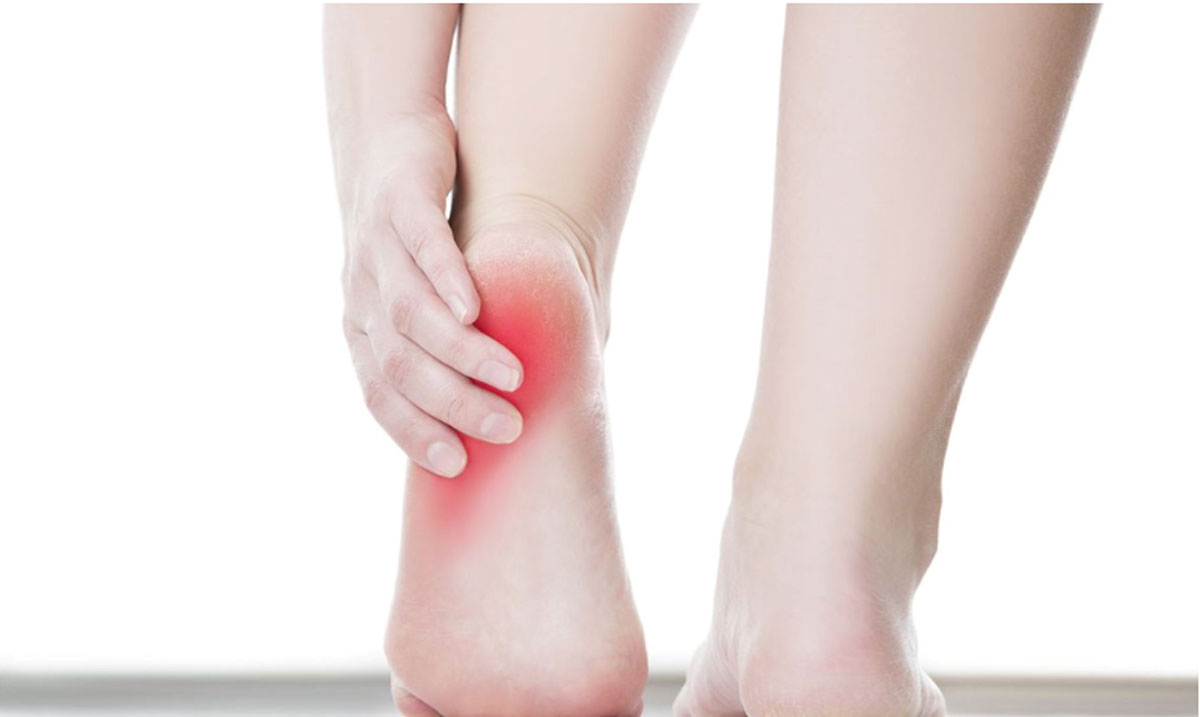
What is it?
Plantar fasciitis is the most common cause of heel pain. It occurs most frequently in athletes and is triggered by excessive mechanical stress.
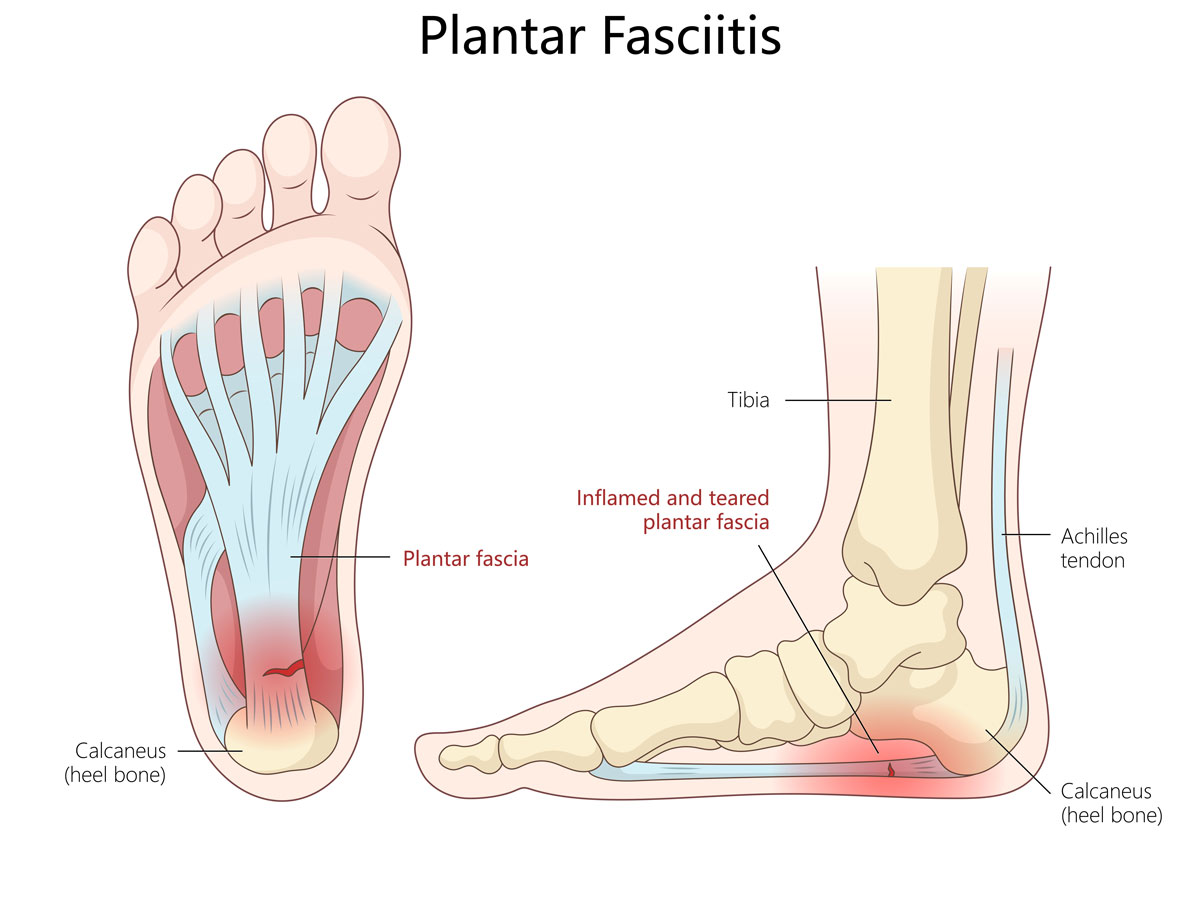
The plantar fascia is a long band of connective tissue that extends from the medial tuberosity of the heel bone (calcaneus) to the heads of the metatarsal bones. It is often considered a continuation of the Achilles tendon.
The central portion of the plantar fascia, known as the plantar aponeurosis (or arcuate ligament), is the main support structure of the foot’s arch. Other ligaments—including the short and long plantar ligaments and the spring ligament (calcaneonavicular ligament)—also contribute to arch support. For this reason, it is more accurate to speak of an integrated support system rather than a single structure.
Causes of Plantar Fasciitis
Plantar fasciitis is an inflammation of the plantar aponeurosis (arcuate ligament), but in reality, it results from the support system’s inability to cope with the mechanical stresses applied to it.
The arcuate ligament works like the string of a bow, helping absorb body weight and movement. When the tension repeatedly exceeds its tolerance, the ligament becomes inflamed, leading to plantar fasciitis.
Main causes include:
- Excessive mechanical load that overwhelms the foot’s support system. This is common in sports such as running, basketball, tennis, and soccer.
- Structural foot issues such as flat feet or high arches, which increase stress on the fascia.
- Inappropriate footwear, such as shoes that lack arch support or high heels, which shorten the Achilles tendon and place excessive strain on the heel and plantar fascia.
Additional risk factors:
- Age (most common between 40–60 years)
- Overweight or obesity
- Occupations requiring prolonged standing
Diagnosis
In the early stages, pain is localized at the heel where the plantar fascia inserts. Over time, the pain may spread toward the front of the foot.
Diagnosis is typically clinical, based on symptoms and physical examination. Imaging tests (X-rays, MRI) are not usually required but may help rule out other causes of heel pain, such as Baxter’s nerve entrapment, subtalar osteoarthritis, stress fractures, or, rarely, tumors.
Treatment
Complete resolution of symptoms often takes several months (typically 6 to 12 months). Initial treatment usually includes:
- Rest and ice – stopping high-impact training and switching to low-impact activities such as swimming
- Stretching exercises – especially targeting the calf muscles (gastrocnemius and soleus) that connect to the Achilles tendon. Stretching should be done regularly, especially in the morning before getting out of bed.
- Causal treatment with Riva Method (see below)
If pain persists for several months, an additional option may include:
- Shockwave therapy – can stimulate healing in chronic cases and may be considered before surgical intervention
The Riva Method (causal treatment)
The Riva Method addresses the root causes of plantar fasciitis through two synergistic mechanisms:
- Reducing mechanical stress on the plantar fascia
By improving single-leg stance stability through proprioceptive training, mechanical overload is minimized. This gradually shuts down the inflammatory process, often eliminating symptoms within a few weeks.
- Increasing ligament resilience and arch support
Through thousands of low- to medium-intensity mechanical stimulations delivered by the Delos system, the plantar arch becomes stronger and the plantar fascia is progressively unloaded.
In summary:
The Riva Method not only resolves plantar fasciitis symptoms but also prevents recurrences and enhances performance.

InjuryMap, Pain under your heel (via Wikimedia Commons), licensed under CC BY-SA 4.0. Changes: resized.
Surgical Treatment
Surgery is reserved for cases lasting longer than 12 months and may involve:
- Removal of heel spurs
- Surgical release of the plantar fascia, which can also be performed endoscopically